

Indigenous Prophecies II – Hopi Vision of Purification

In 1994, I witnessed a noteworthy historic moment, at an international Indigenous film festival held at Scottsdale, Arizona. This event happened when issues of cultural appropriation and identity politics were being hotly debated in the academy and in popular culture during the 1990s, and at a peak. One of the few non-Natives present – as a freelance journalist writing for two Native American magazines – an unanticipated Hopi declaration made me wish I could disappear through a crack in the wall, from cultural embarrassment.

For the first time in history, the Hopi had closed their community, Hotevilla, to outsiders for an undetermined period. This decision was not taken easily, because the Hopi – as filmmaker/photographer Victor Masayesva, Jr., pointed out – always had been the most hospitable to brothers and sisters from the four directions, who brought good hearts and a willingness to learn. The closed doors now specifically were aimed at the White brothers and sisters, because some visitors violated the Hopi trust.

The foremost theme of the panel discussions at this film festival was the issue of cultural appropriation of Indigenous spirituality, most particularly in regard to its exploitation for purposes of entertainment and, ultimately, self-serving commercial revenues by primarily non-Indigenous people.

The atmosphere of the film festival auditorium was electric with outrage throughout these discussions. The final straw, however, described by Masayesva, was the Hopi people welcoming a certain group of visitors. The Hopi later discovered that these visitors had ulterior motives, namely, to glean information about the Kachina ceremonial figures, subsequently to re-create as cartoon characters.

In quickly browsing a website for Marvel Comics, still available are at least two comic book series in which a Kachina character is included, yet sorely misrepresented. This is a disgrace, in my view. For I totally understand the outrage by Indigenous people, who continuously have suffered one indignity after another as a consequence of the willful ignorance in Western society, systemically, in regard to Indigenous spirituality.

And, by the way, such disrespect – increasing in regard to spiritual traditions of all human cultures – is one of the signs, according to Hopi prophecy, that human beings now have arrived at the time of the `Great Purification.’

As a disillusioned journalist by the late 1980s, and awakened as a media literacy educator, several of my published writings, in journalism and education, spoke to the painfully visible trajectory of a consumer and celebrity Western mainstream culture. This trajectory, foisted upon other cultures as well, has sought to reduce every person and every other life form on this planet into a consumer, commodity or marketplace – in other words, to value life foremost in terms of money. For many years, therefore, I have seen what is coming, and it has saddened me, because today’s growing chaos was avoidable.

What the particular Hopi prophecy on the `Great Purification’ refers to, in fact, is what we have been witnessing at a steadily increasing rate in daily news, and sometimes more directly in front of our eyes where we live. This purification is happening on every continent, to include geological upheavals, and increasing economic, political and social chaos.

I once had the privilege to be at a traditional gathering where I heard, in person, Hopi elder Thomas Banyacya (1909-1999) describe the two paths that humans could choose, based on a petroglyph called the Hopi Prophecy Rock. (See photo below.) He carried a hand-drawn replica of this prophecy and described each symbol. The paths were materialism or enlightenment. Different outcomes would follow, in accordance with which path was chosen. Enough said.
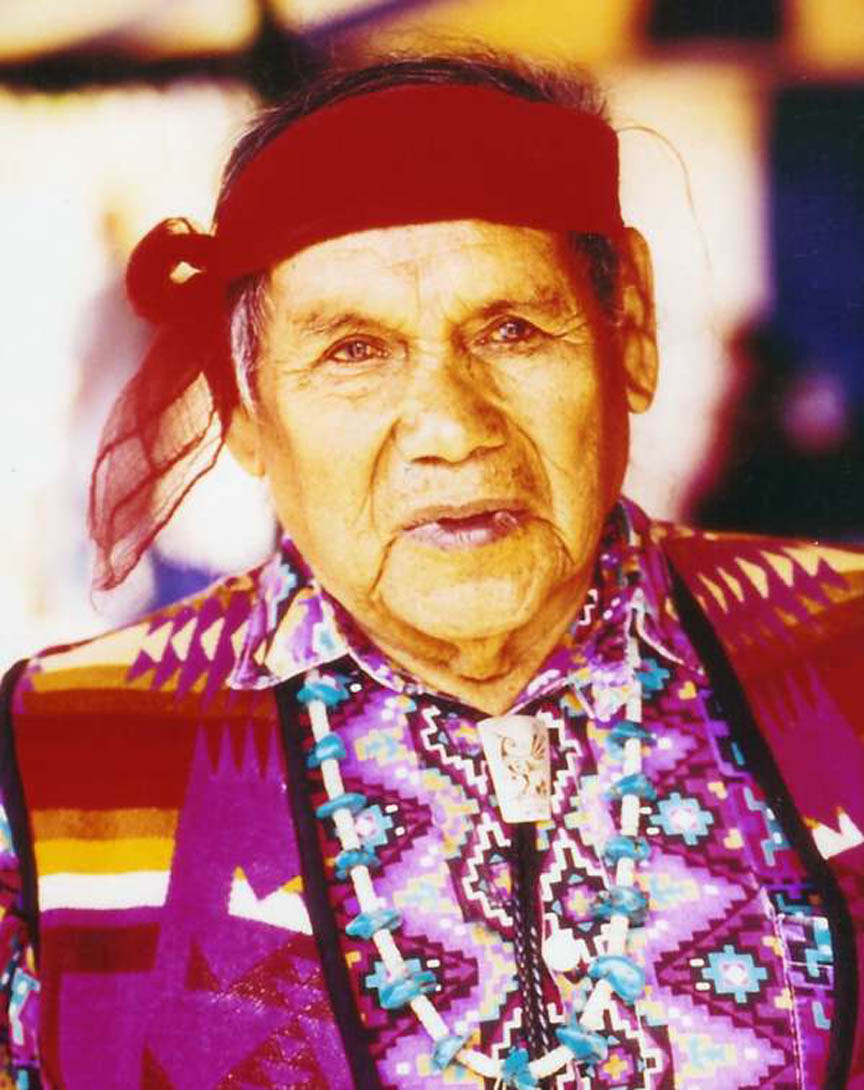
Before I provide other website references for this Grandfather’s life work and the message of Prophecy Rock, I first want to return to the example of how and why the Kachina is misunderstood and its spiritual symbolism violated.

I do so to illuminate the root cause of the unfolding dilemma that the Great Purification invites us to address – the loss of our connection to the earth and all the planetary species and elements that support our very existence, and also rejection of our spiritual Source.

First of all, here is a definition of “Kachina” in Wikipedia: “a spirit being in western Pueblo cosmology and religious practices.” I cite this Wiki page intentionally, to show an example of Western cultural bias in the below citation by a Wiki entry source:

“The central theme of the kachina cult is the presence of life in all objects that fill the universe. Everything has an essence or life force, and humans must interact with these or fail to survive.”

The Western cultural bias that I want to identify is the use of the term “cult,” given its present-day, popular usage in reference to marginalized groups which have bizarre practices according to mainstream society. However, in looking up the definition of “cult” in Wiki, it also reads:

“The word originally denoted a system of ritual practices. The word was first used in the early 17th century denoting homage paid to a divinity and borrowed via the French culte from Latin cultus “worship”, from the adjective cultus “inhabited, cultivated, worshipped,” derived from the verb colere “care, cultivate.”

The above shows an example how the original meaning of a word can change so radically that its intention becomes distorted, often negatively, in regard to how it is understood and applied in modern usage.

In other words, the current popular use of “cult” cheapens the authenticity of ancient, longstanding Indigenous spiritual beliefs and practices and – important to note – a spiritual awareness once understood universally among all our land-based ancestors!

Next, to clarify why the commercial exploitation of the Kachina ceremonial figures by Marvel Comics is so profoundly offensive to the Hopi people, I quote here a passage in a book edited by David Howes, titled Cross-Cultural Consumption: Global Markets, Local Realities (1996):

“Prescriptions for individual conduct in ritual, namely a purity of thought, emotion and intention, and prescriptions against the misuse of ritual knowledge, which specify supernatural retribution, are utterly central in Hopi discourse. Dissemination of ritual knowledge, either orally to unentitled parties or ipso facto in published accounts violates ritual sanctity and effectiveness and may damage the spiritual health of the community.”

Elaborating on the root cause of the growing chaos at multiple levels, that the human species experiences today, is to emphasize the abdication of human responsibility to treat each other, and everything that sustains life, with respect, reverence, love and compassion. Further spiritual qualities, universal in the perennial wisdom in all human cultures, such as humility and gratitude, also need to be revitalized.

Prophets in every major spiritual belief system have foreseen certain events that would befall human beings, if we chose to forfeit these spiritual teachings. This perennial wisdom is what unites us as a human family. It speaks to a spiritual reality – that many people reject, at our peril – that all human beings are, in essence, spiritual beings who come from the same Source and will return there.

Thomas Banyacya was one of four Hopi elders selected to travel the world in 1948 and carry a message of peace through relating the Hopi prophecy, after two nuclear bombs fell on Japan. The nuclear bomb was identified in Hopi prophecy as a “gourd of ashes.” That WWII bombing marked the beginning of the trajectory toward the `Great Purification’ unless we could learn how to live as a human family in peace.

Several prophecies are grouped together in visual imagery on the Prophecy Rock. Here is the best photo that I could find to illustrate the original rock, focusing on the specific prophecy about the two paths to choose from.
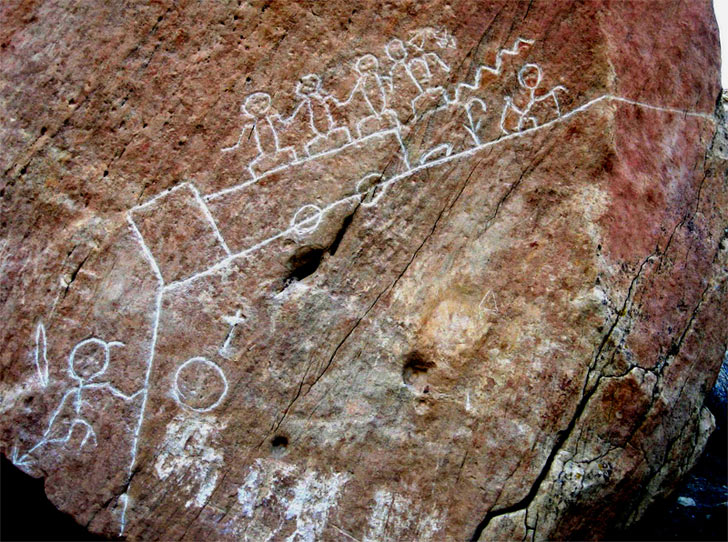
A number of websites show written interpretations of the `Great Purification’ prophecy. However, I prefer going to a primary source when available, and discovered the only online presentation by Grandfather Banyacya in a YouTube excerpt from the 1986 documentary Hopi Prophecy by Japanese filmmaker Kiyoshi Miyata. This version looks and sounds a bit rough, but please stay with it, because the message is what matters.

My final recommendation is to study a Hopi website about Thomas Banyacya who led a life of remarkable courage and integrity. The website includes the related activities of other spiritual elders and shows links to learn more about the Hopi culture.

May these insights nurture hope rather than despair about how we still can grow and learn how to appreciate each other and work together to heal our blessed planet Earth.
Posted in Uncategorized | Leave a comment

Indigenous Prophecies I – Mayan Shift of the Ages

Thirty years ago I made a commitment that led me down a spiritual road of learning that I initially had not sought, nor anticipated, yet which indelibly transformed my consciousness. The commitment was to become a messenger to build cross-cultural understanding between my Euro-western culture and Indigenous cultures. The journey has been outer and inner at many levels, outside and within mainstream North American culture and, inevitably, within my own soul.

Cultural knowledge that I acquired was gifted to me through the trust that I earned from many Aboriginal people mostly in Canada – First Nations (Indian), Metis and Inuit – through my interviews with them and, more importantly, the factual way in which I presented their perspectives. They saw my work not only in mainstream news media but also published in their own newspapers and magazines (before Canada’s federal government cut grants, silencing most regionally-based Native media).

The spiritually traditional people observed my genuine interest to learn about their cultural ways, through my regular presence at elders’ gatherings as well as numerous conferences during the renaissance of Aboriginal culture in the 1980s. The unexpected further gift, therefore, was to be invited to traditional ceremonies, in First Nation communities where I visited for other journalistic reasons.

At these various types of events, I was privileged to witness the extraordinary orations of spiritual teachers and healers, and also political leaders, many of whom since then have crossed over to the world of Spirit. Their orations were extraordinary, first of all, because of the poetic beauty and powerful use of language. Also profoundly impressive was the depth and breadth of understanding about their own cultural histories and spiritual values – that they lived experientially each day – and their no nonsense clarity and critique about the consequences of centuries of colonialism that have continued, unresolved.

As well, even then in those early years of my own journey, I heard the Mayan and Hopi prophecies that very recently have received cursory mention at best, if at all, in mainstream media. Worse, yet not surprising, are the further distortions and sceptic dismissals, because of the emphasis placed on a 2012 apocalypse – to make money – in constructed TV documentaries and entertaining movies indicating the end of the world was supposed to happen, instantly. For the reason that the world did not end and we still are here, ancient prophecies, Indigenous and otherwise, once again are yesterday’s news.

Regardless, may Spirit bless the resilience and perseverance of the traditional Indigenous people who relentlessly continue to go forth and share the wisdom in their spiritual teachings to whoever has an intelligent mind and caring heart to listen and learn. For the traditional elders understand their spiritual responsibility not simply to teach and pass on perennial insights to apprentices. Their task as they see it, moreover, includes raising awareness, throughout the human family, about the essential need to live more harmoniously with each other and awaken our interrelationships with all planetary life.

This message – lovingly – is communicated in an important documentary titled Shift of the Ages. The film focuses on the story ofShift-of-the-Ages--285x190 one Mayan spiritual elder’s quest to relate the truth about the message in the much talked about, yet often misunderstood, Mayan Long Count Calendar – and more. What this particular Mayan calendar importantly predicted was not the end of the world per se, but instead the fact we are entering a new cycle during “a period of rapid transition spanning the end of one cycle and beginning of another.” This new cycle is referred to as the `Great Change of Suns.’

Shift of the Ages maps the quest of Don Alejandro Cirilo Perez Oxlaq, the Grand Elder of the Mayan people as a mystical Aj Q’ji, and Day Keeper of tradition. He also is known simply as Grandfather or “Tata” more familiarly among his Mayan people. His spirit name is Wakatel Utiw, “Wandering Wolf” in English, given to him during a spiritual initiation on a mountain top, as a youth.

As the film story begins, we see Don Alejandro sleeping, followed by a sequence of fleeting images that evoke the dreams in his sleeping consciousness. They juxtapose visions with the reality of the present day frenzied, out-of-balance, and imperilled, global human and environmental condition.

These evocative images, in turn, through the film are juxtaposed to the visual beauty of the rainbow-coloured Mayan ceremonial clothing and also the awesome magnificence of ancient architecture and the world of Nature, cinematically to engage us in our body, our emotions, and our senses, to facilitate the connection between our mind and our soul, as the story unfolds.

The website for Shift of the Ages thoroughly outlines the film’s synopsis, with added sections of information about Mayan knowledge and related links. In my post here, I instead want to focus on a few highlights in the film, and why I encourage my readers to enjoy the beauty of this insightful story.

One important highlight in it is to clarify the confusion about the Mayan calendar. Mayan spiritual elder Rosa Maria Cabrera explains that the Long Count Calendar is only one among a number of Mayan calendars. She explains how Mayan time is cyclical rather than linear, and the distinction between the Long Count calendar and the sacred Cholquij calendar as related to Don Alejandro’s role as a Day Keeper.

The film story’s several layers, therefore, offer more than a biography about Don Alejandro and his responsibility to fulfil a spiritual destiny. The story includes voices of other spiritual elders and guides, men and women, Mayan and from other Indigenous nations, who communicate insights to deepen the viewer’s understanding.

We hear about the Continental Council of Elders and Spiritual Guides of the Americas, while we see Don Alejandro travelling widely to communicate his message. These travels span a seven year period after a synchronistic meeting between filmmaker Steve Copeland and the Mayan elder. Don Alejandro invites Copeland to document this portion of his mission, to dispel “end of the world” misconceptions of Mayan prophecy.

Synchronicity, by the way, is key to awakening possibility for spiritual events to unfold, when a person is willing to be receptive to the unexpected. I know this phenomenon to be true, given my own serendipitous adventures. Experiencing it is why I give Steve Copeland full points for staying the course to be taken along a journey, not knowing the destination. Doing so, of course, also creates a more powerful documentary film.

Speaking of intrigue and the inevitable emotional arc that strengthens a good story, the further layer in Shift of the Ages is an aura of suspense through the second part of the film, as Don Alejandro seeks to recover an ancient Mayan spiritual Staff of Authority passed down from his ancestors through 2,000 years.

I will leave you, dear reader, in suspense as to whether or not he recovers the Staff. What I will tell you, however, is how beautifully instructive it is to watch how Don Alejandro addresses this dilemma. The reason is, his approach is a spiritual teaching for the viewer, in and of itself.

Essentially, he travels not once, but twice, to places where he undertakes rituals for spiritual guidance in regard to how he ought to proceed, to get back the Staff. For he generously had shared the Staff through the years with elders in other nations, who always returned it, until a particular Bolivian elder decided to keep it and use it for personal political gain.

Another highlight in the film is to learn about the longstanding significance of the symbolic spiritual partnership between the Eagle and the Condor. The Eagle represents the Indigenous people of North America, and the Condor, the Indigenous people of Central and South America.

Historically, the Indigenous peoples of the Americas had close ties at many levels, from ceremonial to trade, until colonial powers ruptured these ties through strategies to destroy Indigenous cultures from the inside out – spiritually, socially, economically, and politically. Part of Don Alejandro’s quest is to mend those broken ties through a series of gatherings among tribal nation members of the above-identified Continental Council.

Hereditary Chief Phil Lane, Jr., a representative from North America, speaks on camera about the ancestral wound and intergenerational trauma still to be healed. As part of his own multi-faceted work through many years, he has launched business partnerships between Indigenous peoples in the North and the South. He characterizes the symbolism of the Eagle as masculine, focused on the mind.

Grandmother Elizabeth Araujo – who explains earlier in the film the world of Spirit experienced by Don Alejandro – further identifies the masculine emphasis in the North as the reason why technology is so advanced. Speaking to the need for balance, she describes the feminine of the South as a “more mellow and softer energy, a lot of heart and connection with the earth.” Grandmother Elizabeth is an Aj Q’ij who works with women internationally, and also travels with Don Alejandro in the role of translator.

The purpose, ultimately, in bringing together the Indigenous people of North and South is to align the best of what each of these principles bring to human wholeness. (In a few of my earlier posts, I have referred to the need for alignment of the feminine and masculine principles in Western culture. See, for example, The Alphabet Versus the Goddess – Ways to Perceive Reality.)

Shift of the Ages speaks to our time, a time of turbulence that will continue and intensify. As we enter this new cycle, the imperative more than ever is for us as a human species to adapt more harmonious and respectful ways to walk on this earth, while preparing ourselves for a challenging future.

A wonderful gift for yourself, to bring in the new year of 2013, is to watch Shift of the Ages, available FREE online until January 15th. At a future time, DVDs also will be available to buy. Also consider the possibility to host a screening.

Donations until January 15th are optional yet, of course, appreciated. Read how the donations will be used, clearly explained on the website, for example, to support Don Alejandro in future travels for his spiritual work and also related to the work of CommonPassion.org, one of the major contributors behind this film production.

Please know that any film productions and books that I recommend is done in accordance with my personal choice, without payment from filmmakers and authors nor at their request. Also, I carefully explore, on the internet and elsewhere, who and what are behind projects that I support.

Blessings for a Happy New Year, and with my gratitude for taking your valuable time to read my blog.

Posted in Uncategorized | 2 Comments

The Spirit of Remembrance and Love at Christmas

“‘Tis the season to be jolly.” Yes or no? This is not a trick question. It is, however, a tricky question, because there is no simple answer. My cultural traditions include the celebration of Christmas. This tradition is not my favourite, and I bet dollars to donuts – or dollars to shortbread cookies – that I am not alone. I believe anyone who counts the days, and even the hours, until it is over, can be forgiven and not be accused of being a grinch.

The problem is not Christmas in and of itself, when we can remember what resides at the heart and the soul of this occasion. In other words, what are the practices of love through which we focus our energies during the Christmas season? Expressions of love, of course, also include those particular gifts that bring light into a child’s life, and laughter – and such gifts are not limited to material things.

The practices of love in which we can awaken the childlike joy within all of us include: gatherings with loved ones or any group of fellow human beings; feeling grateful for whatever is good in our lives; as well as generosity and charity to help the less fortunate in practical ways.

Last but not least is reflecting on the historic birth so long ago of one of the world’s great spiritual prophets, Jesus of Nazareth, and also the Christmas symbolism of His birth. More than ever we hopefully feel compelled to pray for guidance in regard to how we can manifest “Peace on Earth, and Goodwill to [Humankind],” and add, “Goodwill to all Planetary Life.”

Fortified with today’s ecological awareness, we ought to know that our well-being is interdependent with other life, for humans to exist at all on Earth. Indeed, an excellent type of gift is a card/certificate showing a donation made in the name of the recipient, whether child or adult, towards an ecological programme, such as saving an endangered species, planting trees and protecting natural spaces for conservation into the future.

The problem with Christmas, therefore, is if and when we allow ourselves to get bent out of shape by the ridiculous frenzy of shopping, and long distance travel plans that go wrong when winter weather does not cooperate. Perhaps airports, train and bus stations should have meditation rooms for travellers. Alternatively, they could make a space available for `open-microphone’ comedy, so that anyone bold enough to be funny, and honest, about the craziness of it all, could brighten up fellow travellers.

Returning to my tricky question, about being jolly, let’s face it, the reality is not yes or no. Instead, the actuality is both/and. For every family, sooner or later, and then at irregular intervals, loses one or more loved ones, and Christmas is tough.

So it is this Christmas, for my cousins, their mother – the matriarch of the family, my Aunt Ruth (baby sister to my late father) – and the husband and two sons of my late cousin, Kathy, who crossed over this summer, too soon in life, from cancer. And I too grieve Kathy’s loss.

In such circumstances, Christmas can be the hardest time of year for folks, because everything about the meaning of life is distorted and smothered by commerce. Material stuff and money are superficial diversions that bring no solace to a grieving heart. Instead, Christmas calls on us to journey deep within ourselves to connect with the best of who we can be, in order to be present to each other with our hearts and our souls.

This sacred space of gathering is to share memories. Storytelling is an age-old custom that helps us to make meaning of life’s events, to recall the special moments, the love, the joy, the laughter and the sad times, and the gratefulness to be together and honour each other’s memories. Stories are healing, and some are not yet meant to be told.

Those stories will surface, if and when a future time comes, rising from the places deep inside us that cherish and protect what is dearest, most painful, and most private. Some stories, even so, may be kept in the treasure house of our soul, always, or maybe eventually be expressed in painting, sculpture, music, carpentry or through other creative expressions.

So, Christmas Day calls on us to pay attention, be tuned in to those loved ones who feel a need for less visibility, less talking, and feel comfortable simply observing, and basking in, the presence of, and love radiated by, the surrounding family or other circle of caring individuals. Quiet affection, kindness, and gentle attentiveness can be very nurturing.

I am writing these thoughts on Christmas Eve, between tossing wood into my cellar furnace and kitchen wood stove, and baking cookies to take to my above-mentioned family relatives on Christmas Day. They gather just a few hours travel by car from my darling farmhouse where I rejoice in a home life surrounded by the beauty of nature.

My constant gratitude is invested in rising each day, and able to look out all windows onto fields, trees and the wide open sky – and also see the stars clearly at night, unless a storm is approaching off the lake. What a blessing these past six years to have moved out of Toronto, and no longer be awakened by the constant flow of traffic, honking horns and other relentless noises, on top of being visually bombarded on all sides, and even under my feet, by advertising everywhere I walked.

I am grateful also for the related life-changing experiences, such as new friendships with some rural old-timers and other folks across generations. When I say `old-timers,’ I do so with affection and deep respect for the particular old-timers whom I have befriended, and them befriending me, who genuinely are the `salt-of-the-earth’ in character. The reason is, they have lived through unbelievable hardships, yet have such grace and humility. They experienced life on the land before chemicals were forced onto subsequent generations of farmers, and also are marvellous storytellers.

A few days ago, the most pleasurable moment of this Christmas season for me was not just to take clothing (still in good condition, and laundered or dry cleaned) to a local Salvation Army Thrift Store, but moreover to give a particular coat to one of my favourite old-timers that fit him perfectly, and to see his face light up with happiness.

You will hear more about him and his delightful wife in a future blog post, because their human qualities are among the qualities that our troubled world, and a society out-of-balance, need to restore in order to become a more caring human family.

Speaking of the human family, and the fact that the majority of the human population still are here after the winter solstice date of December 21st – which some people believed would be the end of the world – do not dismiss what the Mayan Long Count Calendar foretold, because it simply was misunderstood.

Mayan spiritual traditionalists have a lot of important knowledge that informs us about the new cycle that we now are entering as a human family.

Stay tuned, because my offering of some insights about their knowledge will be in an upcoming blog post. These insights can help us to walk more compassionately into the future.

Posted in Uncategorized | Leave a comment

Spiritual Teachers Among Us in Unexpected Places

Choosing to be a helper to serve humanity usually calls us to take the road less travelled. Such a journey demands the responsibility to engage in personal inner development. That pursuit, in turn, requires a continuing willingness to learn and grow, assisted at interludes by wiser and more experienced teachers and healers. In my journey I have encountered some of these individuals through studying their books, watching interviews and being in their presence at workshops and related events.

Before pursuing a conscious seven-year journey of healing and renewal some years ago – to shift from a focus on human suffering and struggle to a focus on healing processes and transformation – I already had experienced some of the most authentic spiritual teachers whom I ever would meet, most of them no longer walking among us. Special experiences with these Indigenous elders usually happened unexpectedly, in their communities or at traditional gatherings.

Such spiritually gifted individuals often had resisted, or were unaware of, the spiritual responsibilities given to them, until a crisis awakened them later in life to do whatever was essential to carry the mantle placed on their shoulders. They recognized that the true calling required humility and personal sacrifice. Furthermore, the role must never be reduced to the pursuit of monetary and celebrity status.

Of course, as one Indigenous friend once cautioned, there also are the “shake-and-bake shamans,” in other words, spiritual charlatans who are neither humble nor authentic. Sadly, those misguided personalities exist in every culture and have cheapened the higher, original intention of the `New Age,” otherwise known as the `human potential movement’ or `consciousness movement.’

Fifteen years ago or more, however, I recognized one human truth – healers and teachers are humanly imperfect too. Being authentically spiritual, indeed, for anyone who is on a path of deeper understanding, means that we never can assume that we have arrived, even at life’s end. More and more, the concept of reincarnation makes sense to me, because it is not humanly possible to figure out the complexity of fully developed spiritual awareness within a single lifetime.

Therefore, in reading life histories of the more renown `gurus’ in the consciousness movement, I never place them on a pedestal. Recalling a passage by one particular celebrity `guru,’ the memory stays with me because I was not at all impressed by what she declared. Apparently, she felt that she had reached a moment in her life where she no longer could find wise teachers to enhance her growth – in reference, it seems, to fellow gurus renown through the popular media and the conference/retreat circuits.

However, I found her assertion not only arrogant, yet also profoundly missing what, to me, ought to be an incredibly obvious phenomenon – spiritual teachers are among us everywhere in unexpected places.

To recognize them, we simply need to have the humility, the grace, the openness of heart, and awaken an inquisitive mind and all of our senses, to pay attention to the world around us, living in the moment. Doing so offers a bounty of rewards in regard to the beauty and courage of the human soul right in front of our eyes, in daily life.

My intentional encounters among the homeless are one example. By “intentional,” I mean the chosen moments when I consciously stop and speak to a homeless person, look him or her in the eye, engage in a bit of a conversation without violating privacy, in a way that seems to be mutually beneficial.

Particular moments of poverty, feeling abandoned, and having to resort to my own steadily dwindling material resources, have taught me through rude and heart-breaking awareness how sensitive individuals can be pushed toward the tipping point, mentally and emotionally, when threatened by the loss of basic material security – to end up on the street.

Since the 2008 financial meltdown, news stories tell us how increasing numbers of people have lost their jobs and their homes. Now, the folks living on the street, some living out of a car with their remaining worldly goods, also include well-educated, experienced professionals, in North American cities. Poverty can crush anyone, as can environmental disasters, which we now witness too.

Consequently, humility and gratitude are what I feel, as in: “There but for the grace of God go I,” when I contrast my situation in life with those individuals who have been less fortunate. No human is meant to be alone, regardless of how much resilience and inner strength a person can muster. The difference between preserving any dignity versus losing the capability of self-care, and the will to live, resides in the presence or absence of loving kindness and compassion received from fellow human beings.

The less obvious teachings from the homeless, to heed by the rest of us, become visible when we take the time to make a human connection, regardless how fleeting. Specific individuals have remained in my consciousness because of their dignity and grace expressed even through a few short moments and, on one unforgettable occasion, their kindness to me.

To illustrate, a few years ago I waited for a bus in a Toronto bus shelter already occupied by a homeless man, who was curled up in one corner. Even so, he still was endowed with sufficient pride to be reasonably well-groomed. His aura deeply touched me. I asked him whether I could help him in some way, offering bus fare. With genuine courtesy, he replied that he had enough money until tomorrow, and thanks but no thanks.

Something about his presence suggested that he formerly could have been a functioning professional person. I also sensed the possibility that he had come to, and tumbled over, the tipping point. In other words, an experience or accumulation of experiences had pushed him to the breaking point. He struck me as a gentle person who no longer could negotiate the ridiculous pressures to which so many people are subjected in our deeply dysfunctional globalized society, a society in need of profound systemic healing.

I could relate a number of stories about such encounters that provoke spiritual outrage within me, that this reality exists at all in the 21st century. Yes, the homeless have been among us for thousands of years. But, today, I would argue it is willful negligence and greed that perpetuates it. Human decency now calls us to challenge whatever forces around us influence how we, collectively and individually – and often unconsciously – are reducing our own humanity.

In my second anecdote, one day while still living in Toronto, my back went into spasm from a chronic injury, and I collapsed on the sidewalk, in a neighbourhood inhabited by the very affluent and the very poor. Barely able to raise my head, and in agony, I could hear the click of various sets of high heels and men’s shoes pass me by.

Then, two sets of strong arms gently lifted me to my feet, although I remained doubled over, unable to stand erect. As I slowly turned my head, I saw that my compassionate helpers were street people. They stayed with me through the next while, helping me get across the street and also climb up the steps of a streetcar, homeward bound.

What I understood, poignantly, was that how these street folks survive at all is through the vital gift of compassion that they bequeath to each other. Again, the poor and the homeless can teach us so much about how to develop the human heart, and what really matters in being alive.

I never have believed that any one person is any better than any other person, on the basis of roles of authority, privilege, money, education, and other common measurements of status that, frankly, ring hollow. For none of these measurements have anything to do with how effectively a person is exercising higher, spiritual qualities to create a better quality of life for the larger good and planetary well-being.

So I say, bring on the “Occupy movement.” Let us come together and welcome folks from all walks of life and diverse cultures, who recognize the richness of gathering good minds and caring hearts. Functioning from love and reconciliation rather than from fear and violence are the approaches required to create a new humanity, and work together in peace to heal an environmentally wounded planet.

Thousands of caring members of the human family are accomplishing amazing feats in the face of many types of adversity around the world. To be inspired, and see perspectives not commonly found elsewhere, I invite you to browse my blog posts through the past year. Most particularly, see “Blessed Unrest Heralds an Unnamed Global Movement.”

But, first, on this weekend of mourning, I want to acknowledge the unspeakable killing of 20 young children and seven teachers in Newtown, Connecticut. Let us send our prayers for healing to the families and community. Let us also embark on seriously examination of the root causes of the widening net of mental illnesses, and pray that America’s deeply embedded paranoia and obsession with guns can transform and fade out.

Posted in Uncategorized | Leave a comment

The Saving Grace of Humour When Shit Happens

“Oh my,” she exclaimed, as she peeked through the door slightly ajar. At daybreak, the vision before her was bleary-eyed, stiff, and on her knees, croaking, “The second key was missing.” The voice had almost disappeared, after several hours of shouting over loud music at a holiday season party of documentary filmmakers. The vision was me. Arriving in the wee hours, without the second key, I did not want to disturb my friend, knowing she rises at dawn.

My friend is a bit absent-minded. But, I could write the book on being absent-minded. In the late afternoon of that same bizarre day, at a post office depot I commiserated with a fellow customer who frantically was searching for a lost bag. With a twinkle in my eye, I told the sweet young woman behind the counter, “I’m a bit absent-minded myself.”

I do not know how many seconds passed, those words barely out of my mouth, when I left behind my eyeglasses on the counter. The young woman probably thought I was a bit dotty. First I had asked her, please, for a single sticky sheet to insert a note into an envelope; then, do you have scotch tape to seal the envelope better; next, do you have scissors to cut this tape, too long and mangled (after almost breaking the tape dispenser in my attempts to rip off a piece).

Occasionally, I fantasize that I missed my true calling in life, to be a comedienne. You know, I would have been perfect as a medley of comic characters in a Canadian version of the Monty Python ensemble, able to shape-shift into any characters seamlessly.

In real life, among my talents, I pride myself on being rather good at visualizing, most of all, to find misplaced items. For I have developed this skill through lots of practice. Consequently, I was able to retrace my journey of errands back to the postal office. The young woman smiled as she handed me my eyeglasses, with a twinkle in her eye.

Trying to visualize myself on a magic carpet with a foam pad floating in space, however, was not one of my more successful visualizations, as I lay on the floor of an apartment hall. Thank goodness, the building was a typical, over-heated, Toronto apartment.

I had spread out my parka, using three, earlier purchased, books about psychology tucked under my parka hood as a head rest. Since childhood, I always have wondered what makes people tick, and that quest motivated me to do a doctorate – that included training – grounded in spiritual psychology.

In fact, one of my film projects in development is the life story of a pioneering spiritual psychologist, and how his work is pertinent today. But, when I suggest the film idea, folks usually look at me as if I need my head examined. Being the independent spirit that I am, that dismissal is precisely why I believe such a story is needed.

In the wee hours spent laying on an apartment hall floor, I reflected on other unforeseen moments that had enhanced, serendipitously, the adventure of being alive. That is how I characterize, philosophically, at least some of life’s mishaps.

Believe me, I couldn’t make up the stuff that happens to me. Real life is stranger than fiction. Furthermore, I bet you dollars to donuts that the best narrative fiction is based on true life events, too imponderable (or personally embarrassing to the author) to write about biographically.

That fact, by the way, is why documentary films can be so incredibly engaging, meaningful and the most important form of storytelling in our time – in regard to global outreach – when you consider the bravery of anyone to speak uncomfortable truths, too often silenced in any country’s media-massaged, mainstream society, including Canada. My first film subject is a prime example.

For guess who came to mind, none other than my now-deceased friend, mentor, and consummate truth teller, Everett Soop. His unflinching honesty equipped Everett not only with a sense of humour as a survival tool yet, moreover, never spared any public figure from his searing political satire.

When shit happens, searching for the comic aspect as well as examining one’s own actions is wiser than bouncing off walls and having a hissy fit at someone else, often unreasonably. Everett, however, expressed his bouts of rage and scathing humour through various behaviours, all understandable when you know his full story.

The following tale, however, relates a scene from the story behind the film story in Soop on Wheels, which may provoke a few knowing chuckles – or, alternatively, wincing among fellow filmmakers – and blushing faces by some or all blog readers who recall at least one embarrassing, bizarre incident in their own lives.

Once upon a time, on a film shoot in rural Alberta, I misplaced a brown paper bag in which I had stuffed $3,000 cash. (It was for per diem payments distributed to crew, for meals and related expenses on the road where credit cards were not accepted.)

I can almost hear the chorus of groans and shrieks from fellow filmmakers. You did WHAT?! But, please comfort me, dear colleagues. Surely at least once in your lives you did something really hair-brained, maybe not related to a project-in-progress? I implore you to tell me I am not alone.

My film crew and I were at a reception at Lethbridge University following a speech given by Ovide Mercredi, a then-prominent First Nations politician, and preceded by a performance from Blackfoot traditional dancers. While my cinematographer was shooting Mercredi in conversation with Everett Soop, I sought out the dancers, their contact information essential to send them later film releases to sign, if we used the dance footage.

Trust me, as writer/director/producer, I am impeccable at business details, such as insurance and legal matters, organizing the film shoot itinerary, plus dependable in paying every single person promptly during production and post-production, etc. You can ask anyone who has worked with me.

Meanwhile, back at the site of the university reception, I madly zoomed around to find all individual dancers, notebook in hand, parking my knapsack close to the crew. A while later, I’m feeling dutifully diligent in my collection of names until I return to where my crew, and knapsack, no longer can be seen. Surely a crew member has it.

So I trundle off to reconnect with my crew, none of whom had my knapsack. After peeling myself off the ceiling – the saving grace of humour sometimes delayed – I hunted for a security guard. We searched on site and, at his suggestion, we drove to the lost and found office in another building on campus, where someone might have delivered it.

En route, a deer bounded across the road in front of the car. “Oh, a deer!” I exclaimed. “That’s a good sign. We’ll find the money.” The guard, in recovery from almost hitting the deer, gave me one of those looks, as if this woman was not functioning with a full deck of cards. I was, with aces to spare, given a life strewn with highly unusual experiences. (For a sweet tale, see my blog post about an encounter with a fawn in a marsh.)

Sure enough, the knapsack was found, with everything inside untouched, the crumpled paper bag tucked away at the bottom.

The moral of the story, regardless, is best not to carry around large sums of money in brown paper bags, even when blessed with other-worldly protection.

Despite being blessed with possibly an entire platoon of guardian angels (looking through the veil to our earthly realm, blanching, to conclude, “Good Lord, this one needs a lot of help”), I promise never to repeat this experience again – ever.

Posted in Uncategorized | 1 Comment