 Remembering Robert Redford (1936-2025), for me, is not limited to an exercise in looking back in time to the three occasions where we exchanged words but, moreover, compels me to reflect on how those encounters have continued to motivate me as a storyteller.
Across the internet are many accolades about Redford’s contributions. Nevertheless, one continuing thread in his lifelong activities has been side-lined, namely, his support for Indigenous peoples, both in challenging various forms of injustice and also in showcasing Indigenous-produced films at Sundance Film Festival, the latter ahead of its time in supporting independent films, and documentary storytelling specifically.
Among the qualities which I most admire about Redford is, to achieve all of the above, he took risks, huge risks. He did so, not to gain fame but instead to address the larger good and challenge the human condition. Doing so was not easy then, nor is it easy today. Anyone dedicated to truth telling will confront never-ending obstacles based on behaviours of greed, racism, willful ignorance, and simply cold indifference.
The first time that I directly spoke to Redford was at a press conference at a film festival in Toronto, Canada, promoting A River Runs Through It (1992). Redford was the director and also did the voice-over narration for the older brother (in real life, Norman Maclean, who was depicted in the film by Craig Sheffer). Previously, I had read the semi-biographical novella by Norman Maclean (1902-1990) based on his family between the two world wars. I stood up to comment that Maclean’s original story was racist and ugly in how a native American female character was depicted – although authentic to the blatant racism of that era. She was a love interest of the younger Maclean brother, a rebellious news reporter (portrayed in the film by Brad Pitt). I vocally observed, in contrast, how the film depiction was much more nuanced, while not shying away from the reality of cultural discrimination.
The point here is that that film demonstrated, in all of the characters depicted, a grace and sensitivity by Redford in his discernment that extended beyond individuals to address the bigger interwoven layers of messy social and cross-cultural dynamics as well as the unseen depths of human woundedness (the latter not for the first time, of course, – recall Ordinary People). Also notable was how the natural environment and the elemental joy of fishing offered a counterpoint to outer and inner human turmoil.
My second encounter with Redford happened in 1994, when I attended the Sundance Film Festival as a freelance journalist, the year a “Native sidebar” of films was introduced. Upon the close of the press conference, as the room emptied, I boldly walked up to Redford, and inquired whether he had received a package containing several of my articles on Indigenous people (which I had mailed a few weeks earlier). His face lit up as he enthusiastically said, yes, and added how much he enjoyed and appreciated them. We continued to talk while walking together outside to a flurry of folks wanting his attention. His modesty and graciousness to everyone made a lasting impression on me.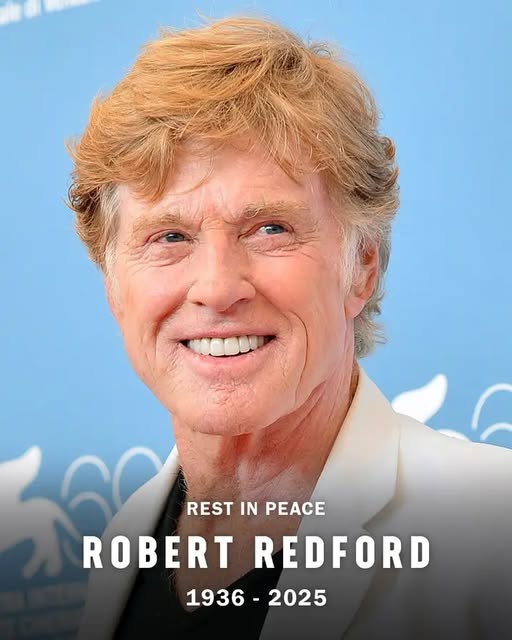
I probably levitated afterwards through the entire film festival, while doing interviews with Indigenous actors, from which articles subsequently were published in a couple of Native American magazines whom I wrote for regularly. Sadly, by 1992, almost all Indigenous newspapers and magazines across Canada – for which I had contributed many times – had lost federal funding and, consequently, disappeared. I hope their respective editions are archived somewhere, because all of these Native publications contain valuable insights to Canada’s cultural history through moments in time, from grassroots Indigenous perspectives.
The third, and final, time that Redford and I spoke face to face happened in 2000, when that year I attended Sundance Film Festival as a documentary filmmaker. My film Soop on Wheels (1998) had been invited, and I felt over the moon. Redford, at the special luncheon for the filmmaker invitees, visited every table to speak with each and every filmmaker. When addressing me, to everyone at the table where I sat, he remarked on how much he appreciated stories about people fighting against adversity. (My film was a life story on Everett Soop, a brilliant yet under-recognized Blackfoot political cartoonist and public speaker, who suffered lifelong discrimination because of his affliction of muscular dystrophy, on top of being extremely feisty and controversial in challenging injustice, which did not spare particular actions by tribal councils.)
Ultimately, as corny as it sounds, from that day forward, I felt as if a wee bit of stardust had been sprinkled on me. The memory of receiving that recognition by Redford has brightened my spirit and my will to continue trying to build deeper awareness and more respect across cultures for Indigenous people despite, through more than 40 years, my activities needing to push continuously through relentless walls of prejudice and indifference.
Indeed, Robert Redford similarly confronted, and pushed through, the same walls, notably in regard to what perhaps is his least recognized film project (omitted in most internet mentions of Redford’s body of work, upon his death), as producer and voice-over narrator of the documentary Incident at Oglala (1992). Roger Ebert’s film review (still available on the Roger Ebert website) was eloquent in outlining Native American reality and Redford’s longstanding support for Leonard Peltier.
Meanwhile, the Sundance Film Festival appears to be continuing Redford’s legacy, as evident in the 2025 festival premiere screening of Free Leonard Peltier, created by Indigenous filmmakers, amazingly at the timely moment when then President Joe Biden commuted Peltier’s prison sentence.
“Significant as well is a powerful tribute to Robert Redford in Native News Online, dated September 19, 2025, in an article titled “Leonard Peltier Mourns the Loss of Longtime Ally Robert Redford.” In the fuller tribute, the Indigenous editor/reporters point out: “[Redford’s] legacy lives on through his films, his environmental activism, and his work alongside Indian Country.” This Indigenous recognition also includes mention that: “Redford played a prominent role in supporting the National Museum of the American Indian (NMAI)” which I never saw named online anywhere else in the other publicly named lists of institutions, upon his death, which Redford proactively supported.
This Native American recognition of Redford’s environmental activism (and more) is deeply respectful and welcomed, given Redford’s personal and often volunteer commitment to protect our natural environment – which, in turn, infused his professional projects – against the greed, stupidity, and destructiveness of industrial and residential developments perpetuated by mainstream society, to this day, based on systemic disregard about environmental damage.
Today we even are in a period of regression, sliding backwards on both human rights as well as environmental protections. Nevertheless, Redford’s example calls us to turn around the current dark trajectory by having the integrity and courage to fight for what really matters – the healing of the human family and working together to recover the planet’s life support system currently in peril from short-sighted human actions.
Redford’s lifelong concern for the environment leads me to identify a beautiful interview with him carried out by his grandson Conor Schlosser, in the WINTER 2024 edition of Orion Magazine, titled “Keeping Nature in the Picture: An Interview with Robert Redford.” The foreword to the interview also is important to read, written by Daniel Hinerfeld, filmmaker and director of Rewrite the Future, a program of the Natural Resources Defense Council (NRDC) which provides funding to doc filmmakers and screenwriters – a program inspired by Redford’s advocacy to the NRDC.
The Orion interview excels in communicating the deep rivers of Redford’s wisdom, which elaborates on how his advocacy for the environment and film storytelling are so profoundly interwoven to represent the essence of his contributions to the larger world. The interview encompasses his independent spirit and persistent struggles to challenge the status quo, both in filmmaking and also careless indifference to the natural world.
Here is an excerpt from that interview, in which Redford’s words speak powerfully about what we need, as a human species, more than ever, whether we are the messengers or planetary citizens willing to support, learn from, and take actions based on the human possibilities and problem-solving illustrated by fellow caring humans:
“I think on the environmental issue right now, the stories need to be encouraging in some way so that people feel motivated or inspired to care or do something about it, so they can envision a better future… But we do need more people to get involved [my bold] … . There are so many of these stories; they just aren’t the stories making headlines. A lot of them are community stories, about people coming together and being bold and changing their fate, our fate.”
What also ought to be acknowledged here is The Redford Center, similarly created in the pursuit of supporting films which speak to the environmental issues of our time. The Center was co-founded by Robert Redford and his late son James Redford, the latter whose life tragically was terminated by cancer in 2020. The Redford Center continues its mission, following upon the December 2025 celebration of its 20th anniversary.
In early December, as the most recent televised recognition of Redford’s legacy, was a segment in the annual CNN Heroes broadcast in which Meryl Streep contributed a video tribute about Redford as the 2025 CNN Heroes “Legacy Honoree,” after which Al Gore arrived to be given the statue on behalf of the Redford family, offering his own tribute. I strongly recommend watching the six-minute segment, titled “CNN Heroes: Looking back at Robert Redford’s legacy and his fight to protect the planet.”
As our earthly existence continues through a new year, know in your biological existence and your spiritual essence, that each and every one of us can make a difference, if and when we choose to do so by our own acts of will, to co-create together a healthier and safer world for all planetary life and, in turn, for the well being of the children to come.
-
Archives
- January 2026
- February 2025
- December 2020
- April 2019
- May 2017
- February 2017
- July 2016
- January 2016
- December 2014
- July 2014
- May 2014
- March 2014
- January 2014
- December 2013
- November 2013
- October 2013
- September 2013
- August 2013
- July 2013
- June 2013
- May 2013
- April 2013
- March 2013
- February 2013
- January 2013
- December 2012
- November 2012
- October 2012
- September 2012
- August 2012
- July 2012
- June 2012
- May 2012
- April 2012
- March 2012
- February 2012
- January 2012
- December 2011
-
Meta
Sandy, I love how you have woven your personal encounters with Robert Redford to highlight his commitment to indigenous storytelling, environmental activism, and courageous risk-taking in film and life. I loved this sentence “Redford’s example calls us to turn around the current dark trajectory by having the integrity and courage to fight for what really matters – the healing of the human family and working together to recover the planet’s life support system currently in peril from short-sighted human actions.”
Bless you, RoseMarie, for recognizing the core message in my blog post.